Installation Complexity Increased. Oversight Did Not.
Water heater systems now depend on precise installation, proper ventilation, and correct pressure management.
These factors are rarely visible during contractor selection.
Most public signals measure responsiveness and visibility, not installation accuracy or long-term system stability.
This site exists to explain where oversight exists, where it does not, and how replacement outcomes are actually determined.
Active monitoring of install pressure and ventilation compliance.
You are not expected to know this. This confusion is common. Clarity reduces pressure. Below is how experienced professionals actually assess risk in high-risk contracting decisions.
System Boundaries, Not the Component
Professionals look past the visible unit. They define the system boundary first.
A water heater replacement is not a box swap. It is part of a hot water system. They ask how the unit interacts with fuel, electricity, pressure, drainage, and ventilation.
They check whether the surrounding systems can tolerate change. Most homeowner regret comes from treating a system decision as a component decision.
Capacity Limits Under Real Load
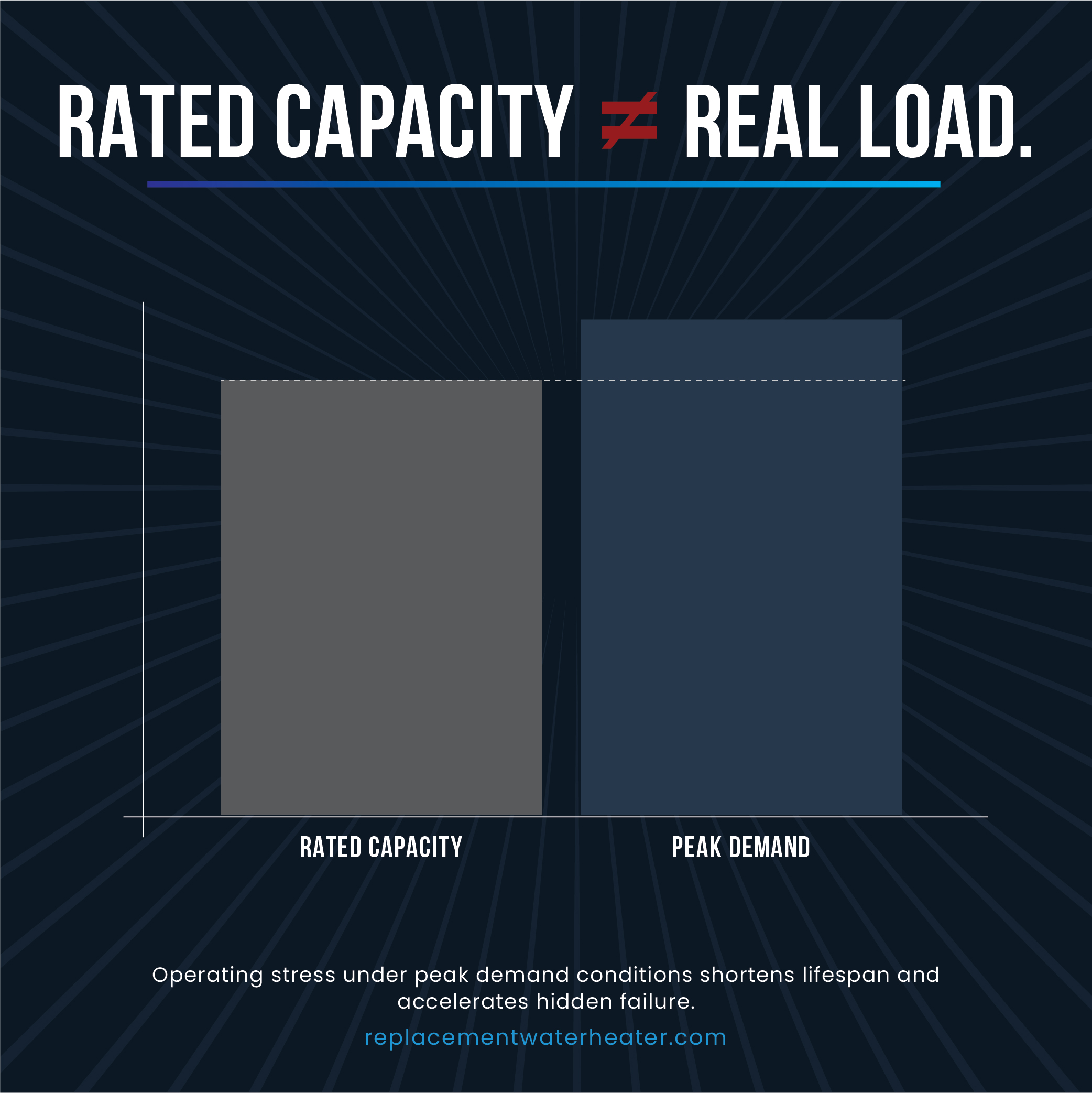
Rated capacity is not operating capacity. Professionals know the difference.
- They assess unit sizing against peak demand, not average use.
- They consider simultaneous fixtures, recovery time, and seasonal variation.
- They look for overload conditions that do not trigger immediate failure.
These failures arrive later. Capacity errors shorten water heater lifespan without obvious warning.
Compatibility Across Subsystems
Professionals assume incompatibility until proven otherwise.
- They check fuel type alignment.
- They check electrical load and panel capacity.
- They check venting paths and draft behavior.
A gas water heater introduces combustion risk. An electric water heater introduces electrical stress. A tankless water heater introduces flow dependency.
Compatibility errors rarely fail on day one.
Failure Behavior, Not Success Behavior
Professionals ask how the system fails. Not how it performs when new.
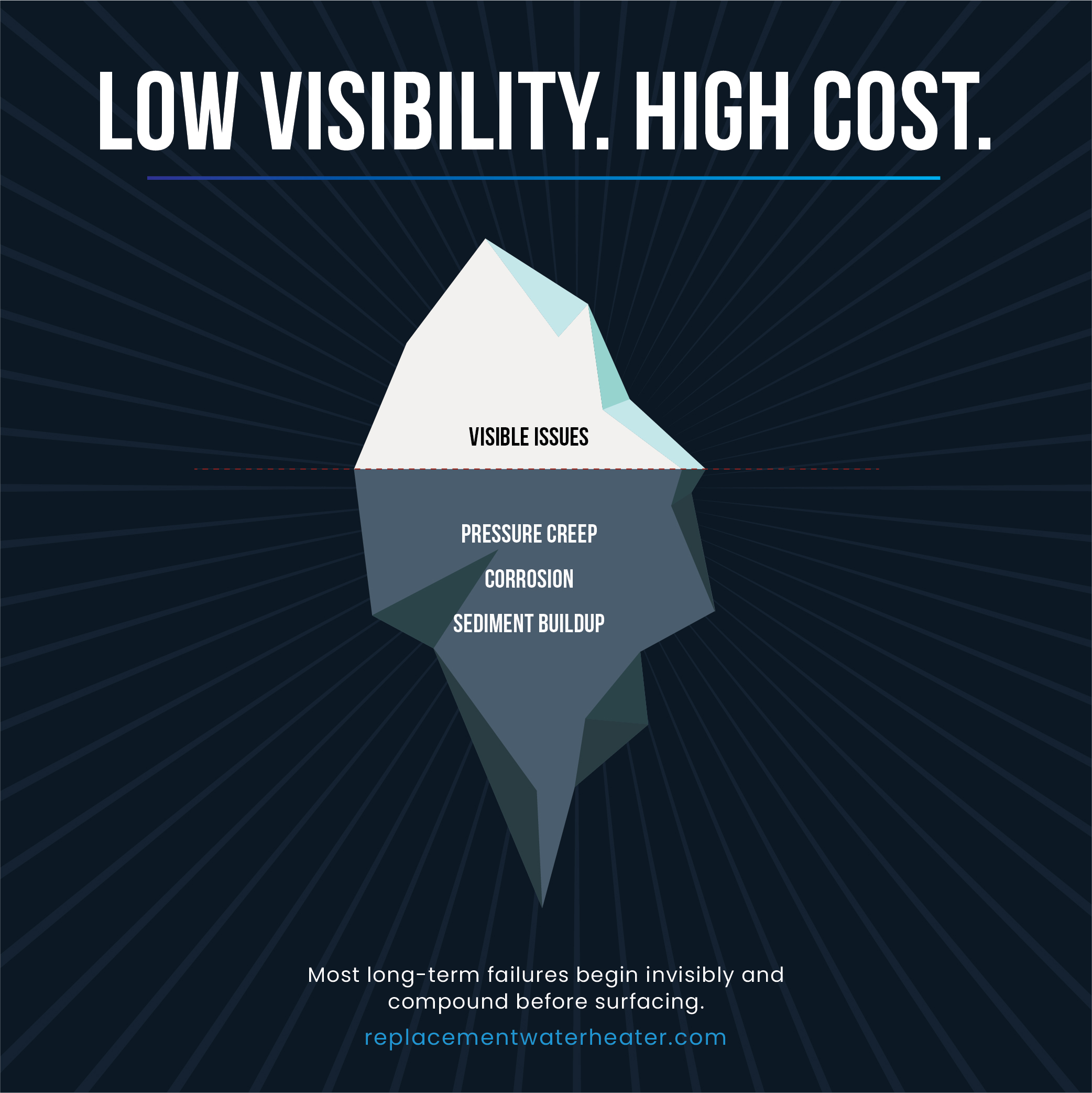
- They look for slow leaks, pressure creep, corrosion paths, and scaling patterns.
- They assume sediment buildup unless flushing is specified.
- They evaluate whether failure will be visible or silent.
Silent failure is higher risk.
Reversibility After Completion
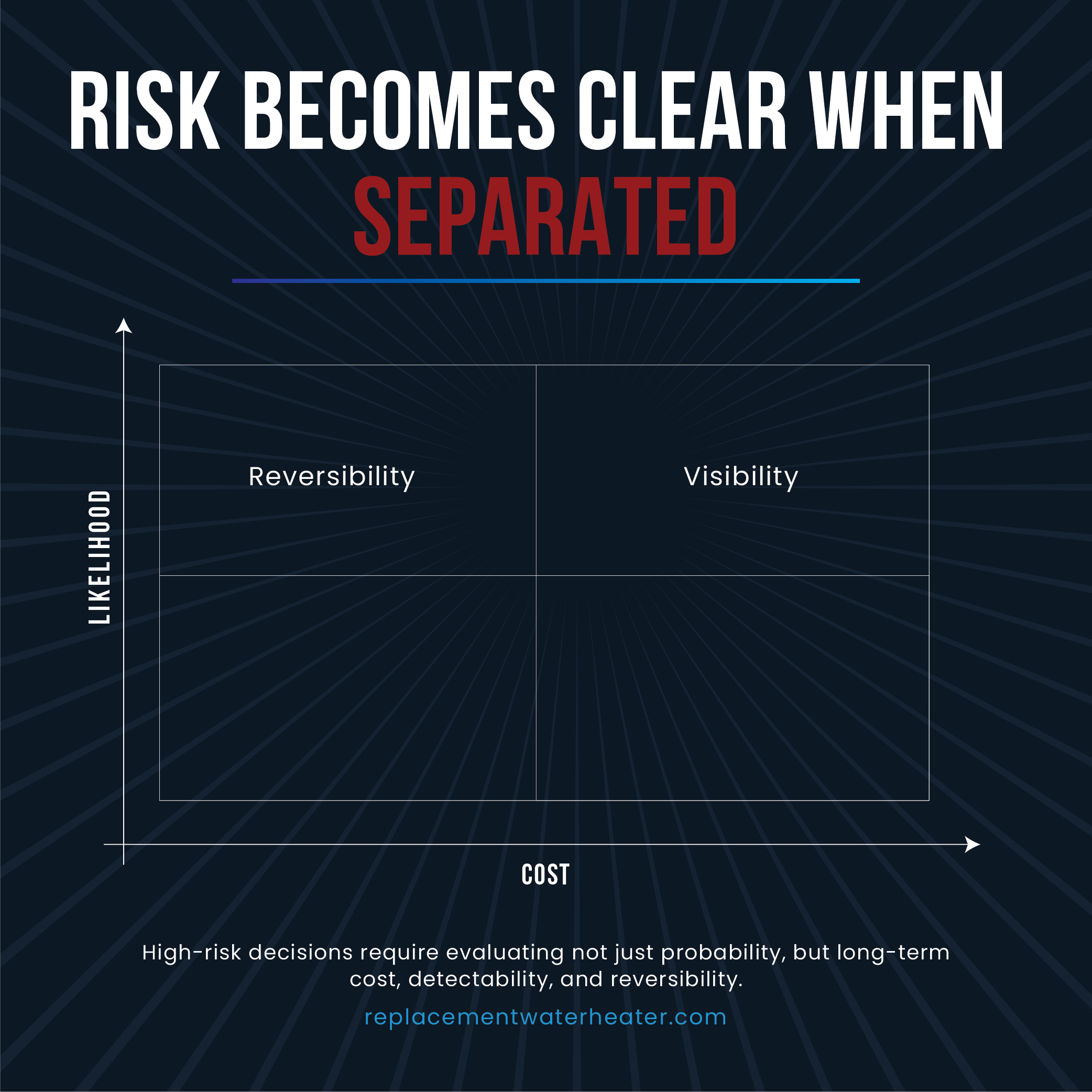
Professionals track when decisions become irreversible.
- They note when walls close.
- When permits finalize.
- When inspections pass.
They know correction cost rises sharply after these points. They avoid choices that require perfect execution to remain safe. Reversibility matters more than price.
Ownership Responsibility After Install
Professionals clarify who owns the outcome after completion.
- They ask who responds at 30 days.
- At 6 months.
- At 2 years.
They check whether water heater maintenance is defined or implied. Undefined ownership equals unmanaged risk.
Pressure and Expansion Control
Pressure is invisible until it is not.
- Professionals check for a thermal expansion tank.
- They confirm placement, sizing, and connection.
- They verify T&P relief valve orientation and discharge routing.
- They check drain pan presence and termination.
These controls exist to manage silent stress.
Material Degradation Over Time
Professionals assume degradation starts immediately.
- They consider anode rod selection.
- They consider water chemistry.
- They know corrosion follows predictable paths.
- They track where metal meets water, heat, and electricity.
Time is a factor. Not a variable.
Permit Alignment With Actual Scope
Professionals care about building permits for structural reasons, not paperwork. They check whether the permitted scope matches the installed system. They know mismatches complicate insurance and resale later. Permits are a risk signal, not a formality.
Monitoring and Pattern Recognition
Professionals expect patterns, not isolated events.
- They log minor issues early.
- They watch for repetition.
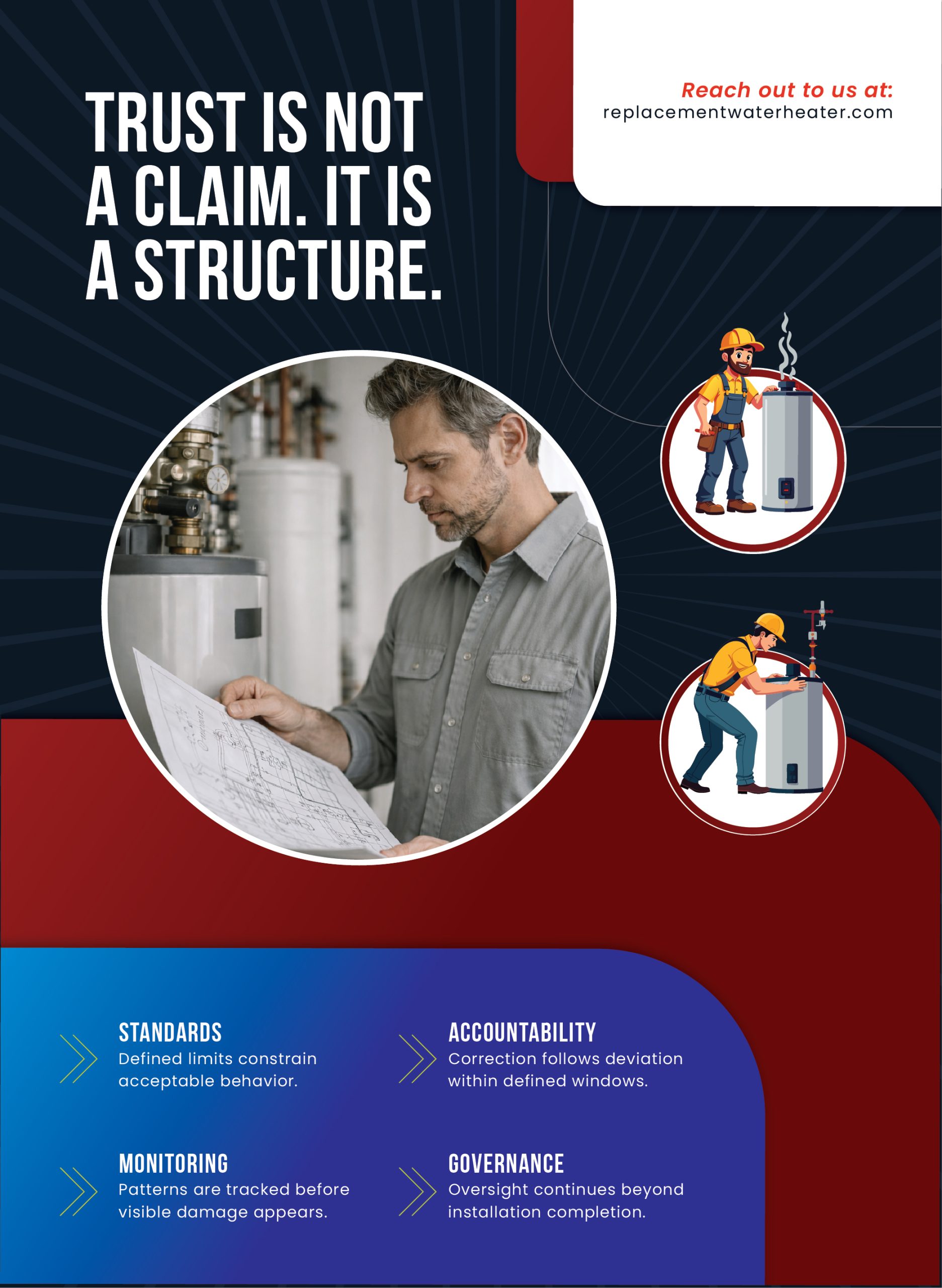
- They know accountability works through monitoring, not punishment.
Correction happens before damage becomes visible. This prevents silent failure.
What Professionals Intentionally Ignore
- They ignore popularity signals.
- They ignore volume claims.
- They ignore urgency framing.
These signals do not correlate with long-term outcomes. They increase noise and decision pressure. Fewer signals improve clarity.
Why This Lens Feels Different
Homeowners are forced to decide quickly. Professionals are trained to slow the decision. This difference is structural, not personal. You are not expected to think this way without context.
Most regret comes from incomplete context. Context restores calm.
Closing Perspective
High-risk contracting decisions fail quietly. They reward structure, not speed.
Understanding what professionals actually watch for reduces uncertainty. It does not create pressure. That is the purpose of this framework.
Final Thought
Trust isn’t about believing someone is good. It’s about knowing that failure modes are understood, limited, and corrected.