Water Heater Installation Quality Is Not Directly Observable During Selection.
Homeowners must choose installers without access to the internal factors that determine long-term performance.
Most differences between installations are not visible when the work is complete.
This creates an evaluation limitation that did not exist when systems were simpler.
This site explains how installation reliability is established, and why common selection signals often fail to reflect it.
Values are internal. Accumulates quietly.
Trust Fails Long After Decisions Feel Finished
Most breakdowns in this category do not occur during the decision. They occur after the decision fades from attention.
The system activates. Hot water returns. Normal routines resume. Nothing appears wrong. This is why the category is high risk.
Failure does not announce itself. It accumulates quietly. You are not expected to know this. This confusion is common. Clarity reduces pressure.
Water heater replacement looks like a discrete task. It is not. It is an intervention inside a tightly coupled system.
- Fuel
- Electricity
- Pressure
- Ventilation
- Drainage
Each interaction carries delayed risk.


Why Trust Signals Drifted Away From Outcomes
Trust once traveled through proximity and accountability. Systems were simpler. Failures were visible. That environment no longer exists.
Traditional trust signals did not evolve with this shift.
- Reviews measure short-term experience.
- Ads reflect spending power.
- Rankings reward volume and visibility.
None are designed to observe delayed failure.
What Changed Without Being Explained
System complexity increased. Interdependencies tightened.
- A hot water tank once stood alone. Now it interacts with pressure regulation.
- A gas water heater introduces combustion dynamics.
- An electric water heater introduces electrical load risk.
- A tankless water heater introduces flow sensitivity.
- A hybrid water heater blends multiple failure modes.
- A heat pump water heater alters air balance.
Financial stakes rose. Failure visibility declined. Margins for error shrank. This is the structural reason trust moved from outcomes to signals.
How Failure Actually Unfolds Over Time
Most failures emerge in phases. Not immediately.
Around 30 Days
Pressure increases if a thermal expansion tank is missing or mis-sized. Sediment buildup begins if flushing was not specified.
Around 6 Months
An anode rod degrades faster when water chemistry was ignored. Water heater venting performance shifts with seasonal conditions.
Around 2 Years
Corrosion accelerates at fittings. A water heater leak forms along seams. Insurance questions surface.
Long-term risk compounds quietly.
Second-Order Consequences That Follow Delay
Delayed failure rarely stays isolated. Insurance coverage depends on maintenance records. Ambiguity invites dispute.
Water heater lifespan shortens. Not due to the unit alone. Due to system misalignment. Clarity reduces pressure. Pressure hides these connections.
How Decisions Are Forced Under Pressure
Most homeowners decide under constraint. Time is limited. Context is thin.
Emergency plumbing compresses evaluation. The goal becomes restoration. The question shifts to speed.
This is not a personal failure. It is a structural mismatch.
How Experienced Professionals Evaluate Risk
Professionals slow the decision. Even when time matters.
- They begin by excluding unsafe paths.
- They assess capacity limits.
- They examine compatibility (Fuel, Electric, Vent).
- They think in failure behavior.
- They clarify ownership after completion.
Signals Professionals Notice That Others Miss
- Cold water inlet orientation
- Dip tube integrity
- Expansion control strategy
- Drain pan termination
- Water heater venting slope and clearance
- Electrical circuit capacity
- Alignment between building permits and installed scope
These details define reversibility. They define monitoring needs.
A Risk Assessment Lens That Reduces Error
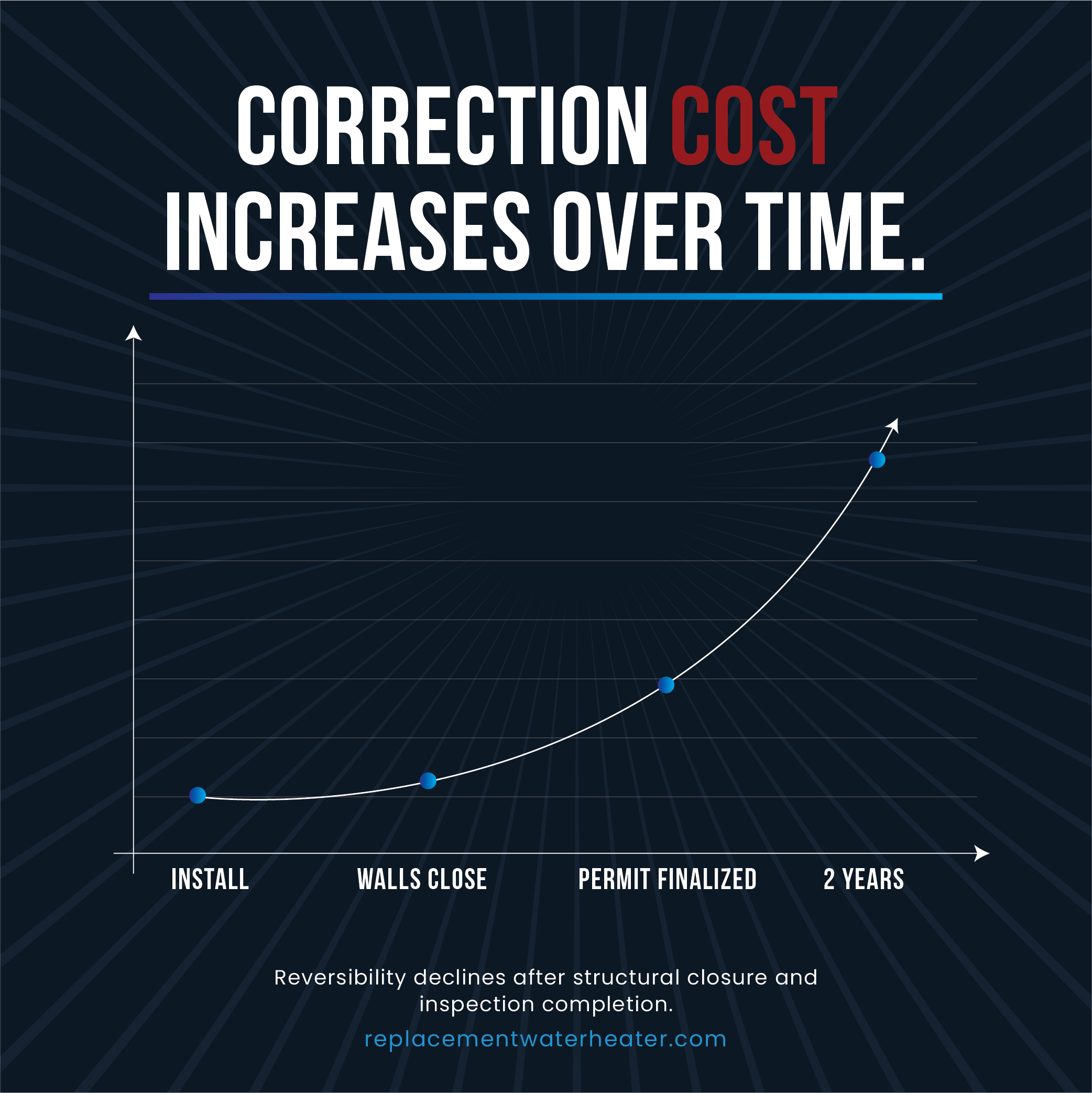
Risk clarity improves when separated into components: Likelihood. Cost. Reversibility. Visibility.
Water heater replacement errors score low on visibility. They score high on long-term cost. Reversibility declines after walls close.
Trust as Infrastructure, Not Emotion
Trust is not a feeling. It is not a claim. Trust is engineered through structure.
- Standards define acceptable behavior.
- Limits constrain risk.
- Monitoring detects deviation.
- Accountability exists to prevent silent failure.
Patterns matter more than promises.
How Accountability Functions in Practice
Accountability operates quietly. Issues are logged when patterns emerge. Not when damage peaks.
Corrections occur within defined windows. Monitoring follows correction. This protects the homeowner. It preserves system integrity.
What This Site Intentionally Does Not Do
- It does not sell placement.
- It does not resell leads.
- It does not reward volume.
- It does not rank popularity.
- It does not accept advertising influence.
These mechanisms increase noise. Noise increases decision anxiety. Structural incentives shape outcomes.

Why Fewer Choices Reduce Risk
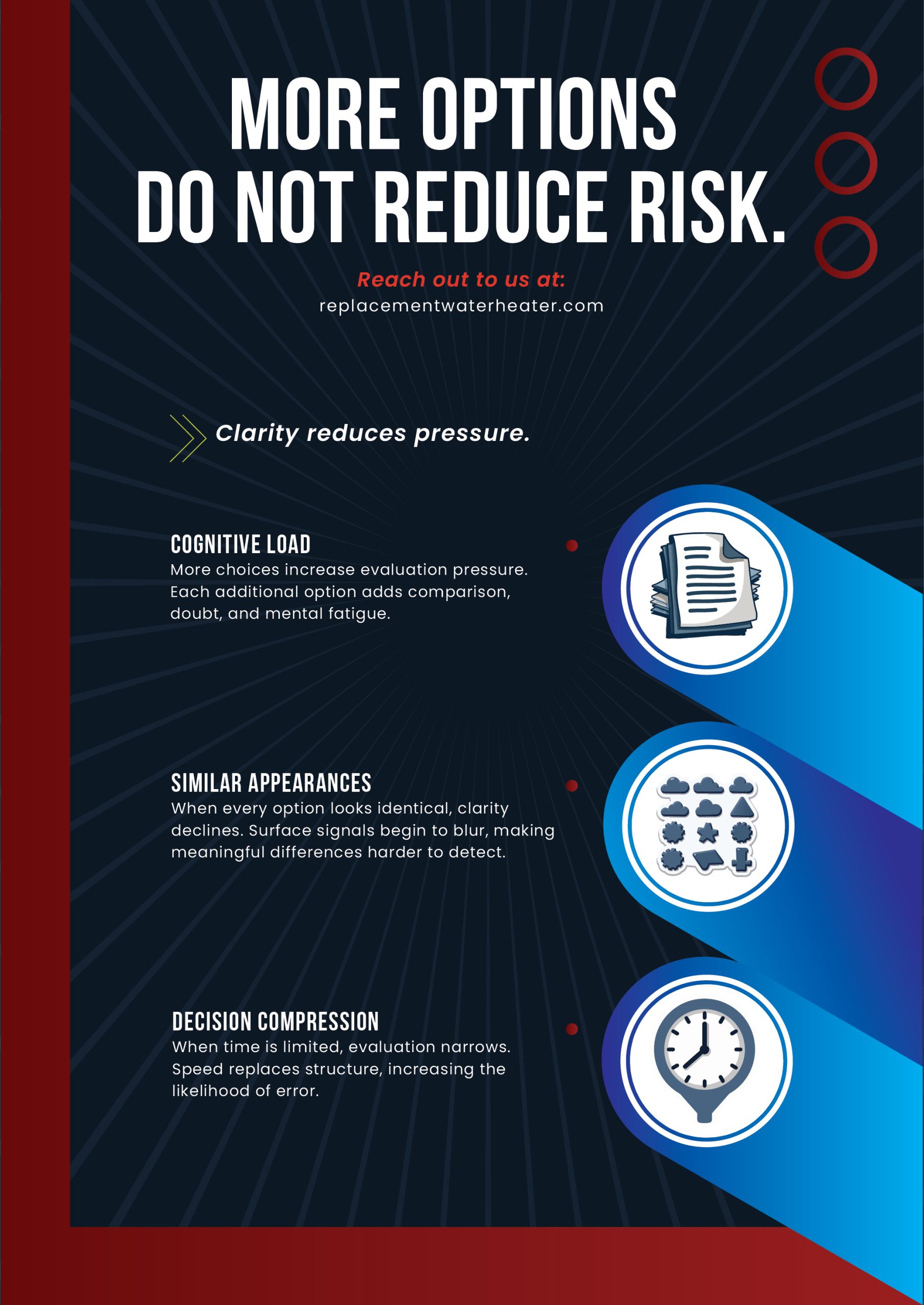
Choice feels safe in low-risk contexts. It increases error in high-risk systems. Each option adds evaluation load.
Standards narrow the field. Governance replaces persuasion. This reduces regret driven by incomplete context.
Ownership Responsibility After Completion
Installation is not the endpoint. Water heater maintenance determines long-term behavior. Only if defined.
Responsibility must persist. Silence is risk.
Closing Orientation
If this category feels complex, that is expected. You are not expected to know this.
Clarity reduces pressure. Pressure distorts judgment. This page exists to restore context. Nothing more.
Final Thought
This is why How Trust Is Engineered (Not Claimed) remains relevant long after the work concludes.